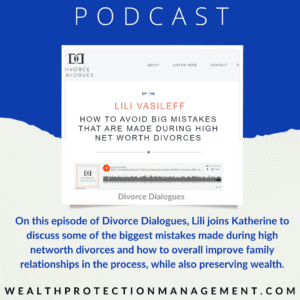
Lili joins Katherine Miller of Divorce Dialogues on Episode #156 “HOW TO AVOID BIG MISTAKES THAT ARE MADE DURING HIGH NET WORTH DIVORCES” to discuss some of the biggest mistakes made during high networth divorces and how to overall improve family relationships in the process, while also preserving wealth.
Just because someone may have a high net worth, doesn’t always mean they are good with their money or have ‘enough’ to feasibly survive on, in the grand scheme of things. Their expenses, assets, investments, or lack thereof, and whether or not they are really going to be able to support their lifestyle over the term of the owner’s life, all need to be taken into consideration. It’s not just the question of money. It’s everything that surrounds the money questions. So, for anyone with a high net worth who is going into a divorce, what do we need to know to allow a peace of mind over all the critical and unique financial decisions involved?
You can also listen to Divorce Dialogues on the following platforms:
Anchor: https://anchor.fm/divorcedialogues
Spotify: https://open.spotify.com/show/3rofibGs5gHUowR2oq5hiq
Google Podcasts: https://podcasts.google.com/feed/aHR0cDovL2ZlZWRzLnNvdW5kY2xvdWQuY29tL3VzZXJzL3NvdW5kY2xvdWQ6dXNlcnM6MTU5NDUyMzQ4L3NvdW5kcy5yc3M
Radio Public: https://radiopublic.com/divorce-dialogues-GOXqKN
Pocket Casts: https://pca.st/sg59joka
Apple Podcasts: https://podcasts.apple.com/us/podcast/divorce-dialogues/id1022959632